Week of Feb 1
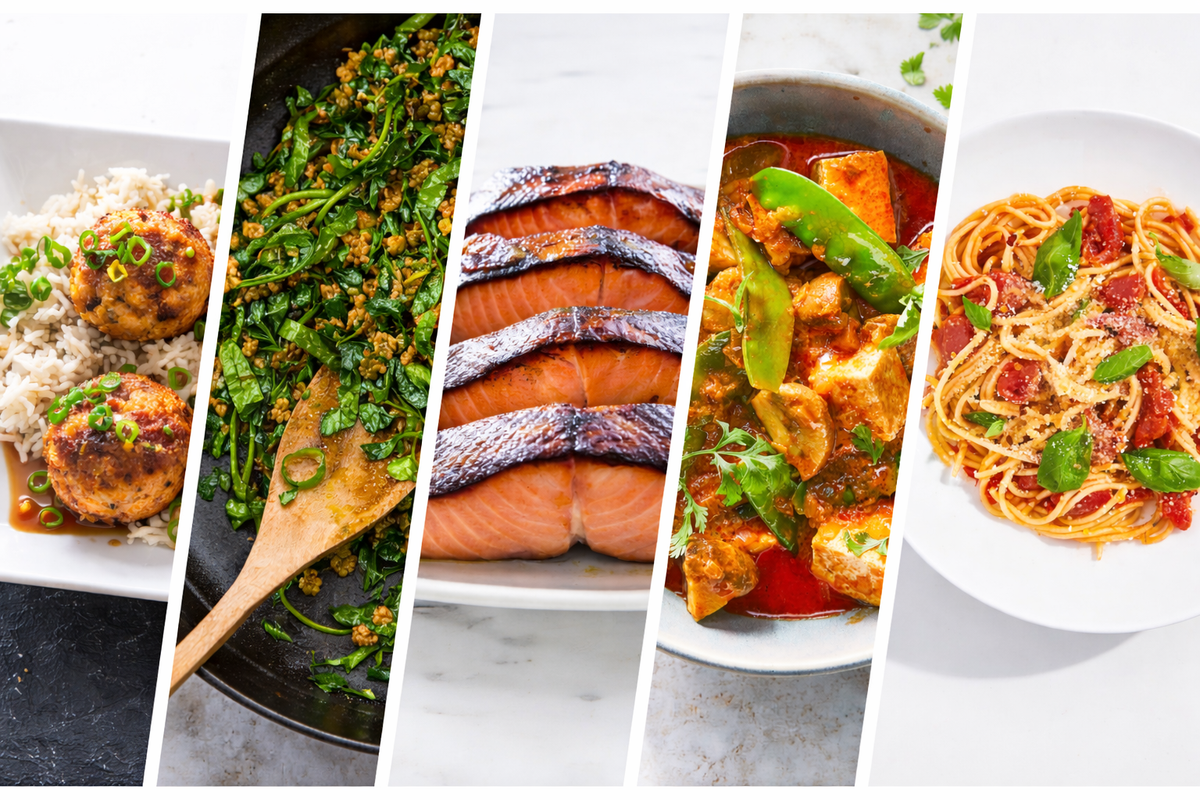
Greetings my fellow home chefs. This weeks' recipes offers us two opportunities to confront our national fear of fish-based condiments, and allow you to pass through to a world of amazing umami flavor. The first is the addition of anchovies in Sundays meatballs, and Wednesday's tofu curry uses a splash of fish sauce. Friday's spaghetti Pomodoro is a wonderfully simple recipe that will reveal how pasta in a (good) restaurant can just taste better with more or less the same ingredients you use at home.
The recipes are available for download in Paprika format, and if you want this newsletter in a compressed, easier to skim version click on the "view in browser" link above.
Sunday
Recipe
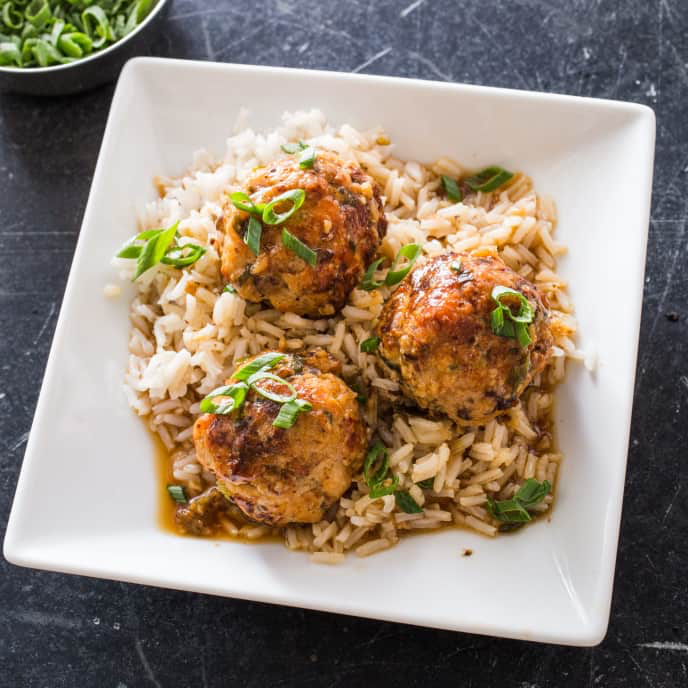
Turkey Meatballs with Soy and Sesame
Servings: Serves 4 to 6
Ingredients:
GATHER YOUR INGREDIENTS
1 ½ cups chicken broth
½ ounce dried shiitake mushrooms
2 slices hearty white sandwich bread, torn into 1-inch pieces
1 ounce Parmesan cheese, grated (1/2 cup)
6 scallions, white parts minced, green parts sliced thin on bias
1 tablespoon sugar
2 ½ teaspoons unflavored gelatin
Salt
1 ½ teaspoons white pepper
2 anchovy fillets, rinsed and patted dry
1 ½ pounds 85 or 93 percent lean ground turkey
1 large egg, lightly beaten
2 tablespoons water
3 tablespoons vegetable oil
2 garlic cloves, minced
1 tablespoon soy sauce
2 teaspoons sesame oil
Directions:
Microwave broth and mushrooms in covered bowl until steaming, about 1 minute. Let sit until softened, about 5 minutes. Drain mushrooms in fine-mesh strainer and reserve liquid.
Pulse bread in food processor until finely ground, 10 to 15 pulses; transfer bread crumbs to large bowl (do not wash processor bowl). Add Parmesan, scallion whites, half of scallion greens, sugar, 1 1/2 teaspoons gelatin, 1 teaspoon salt, and 1 teaspoon white pepper to bowl with bread crumbs and mix until thoroughly combined. Pulse mushrooms and anchovies in food processor until chopped fine, 10 to 15 pulses. Add mushroom mixture, turkey, and egg to bowl with bread-crumb mixture and mix with your hands until thoroughly combined. Divide mixture into 16 portions (about 1/4 cup each). Using your hands, roll each portion into ball; transfer meatballs to plate and refrigerate for 15 minutes.
Sprinkle remaining 1 teaspoon gelatin over water in bowl and let stand until gelatin softens, about 5 minutes. Heat vegetable oil in 12-inch nonstick skillet over medium-high heat until shimmering. Add meatballs and cook until well browned all over, 5 to 7 minutes. Transfer meatballs to paper towel–lined plate, leaving fat in skillet.
Add garlic to skillet and cook, stirring constantly, until fragrant, about 30 seconds. Increase heat to high, stir in soy sauce, sesame oil, reserved mushroom liquid, gelatin mixture, and remaining ½ teaspoon white pepper and bring to simmer. Return meatballs to skillet, reduce heat to medium-low, cover, and cook until meatballs register 160 degrees, 12 to 15 minutes, turning meatballs once. Transfer meatballs to platter. Season sauce with salt to taste, pour over meatballs, garnish with remaining scallion greens, and serve.
Tips TLDR;
To save time and improve the overall consistency of the meatballs, I make the bread crumbs in the food processor first, then without taking out the bread crumbs add everything else including the mushroom mixture and anchovies and pulse to an evenly minced texture, then add this to turkey and egg in the bowl.
I serve this with orzo.
Monday
*Heads up! Overnight marinating is recommended.
Recipe
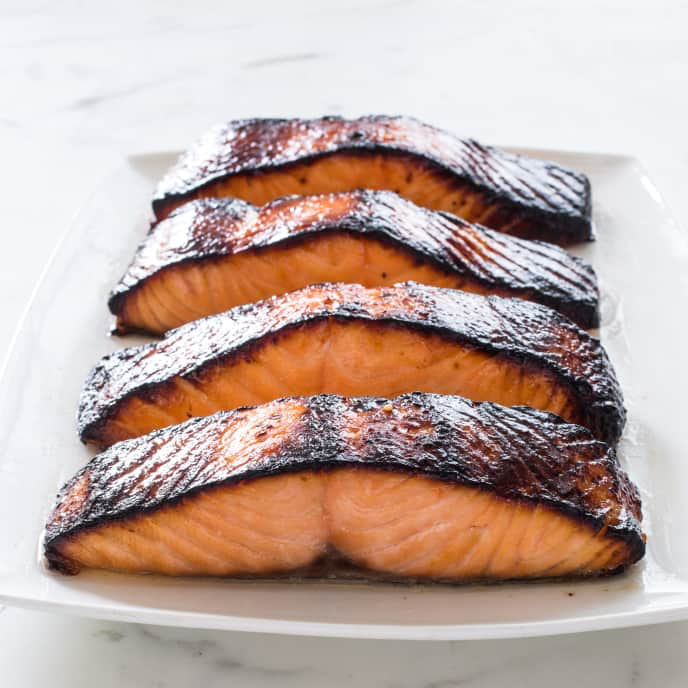
Miso-Marinated Salmon
Cook Time: 30 minutes | Servings: Serves 4
Ingredients:
GATHER YOUR INGREDIENTS
½ cup white miso paste
¼ cup sugar
3 tablespoons sake
3 tablespoons mirin
4 (6- to 8-ounce) skin-on salmon fillets
Lemon wedges
Directions:
BEFORE YOU BEGIN
Note that the fish needs to marinate for at least 6 or up to 24 hours before cooking. Use center-cut salmon fillets of similar thickness. Yellow, red, or brown miso paste can be used instead of white.
Whisk miso, sugar, sake, and mirin together in medium bowl until sugar and miso are dissolved (mixture will be thick). Dip each fillet into miso mixture to evenly coat all flesh sides. Place fish skin side down in baking dish and pour any remaining miso mixture over fillets. Cover with plastic wrap and refrigerate for at least 6 hours or up to 24 hours.
Adjust oven rack 8 inches from broiler element and heat broiler. Place wire rack in rimmed baking sheet and cover with aluminum foil. Using your fingers, scrape miso mixture from fillets (do not rinse) and place fish skin side down on foil, leaving 1 inch between fillets.
Broil salmon until deeply browned and centers of fillets register 125 degrees, 8 to 12 minutes, rotating sheet halfway through cooking and shielding edges of fillets with foil if necessary. Transfer to platter and serve with lemon wedges.
Tips TLDR;
I cut the fish into servings and put it in the marinade mix the night before. Just how I roll.
The marinade has a lot of sugar in it and will get really blackened in most broilers before the fish is cooked. If thats how you like it, cut loose. Personally, I bake the fish in the oven @425 or so for 7 minutes, then turn on the broiler.
I also seem to always serve this with back "forbidden" rice.
Tuesday
Recipe
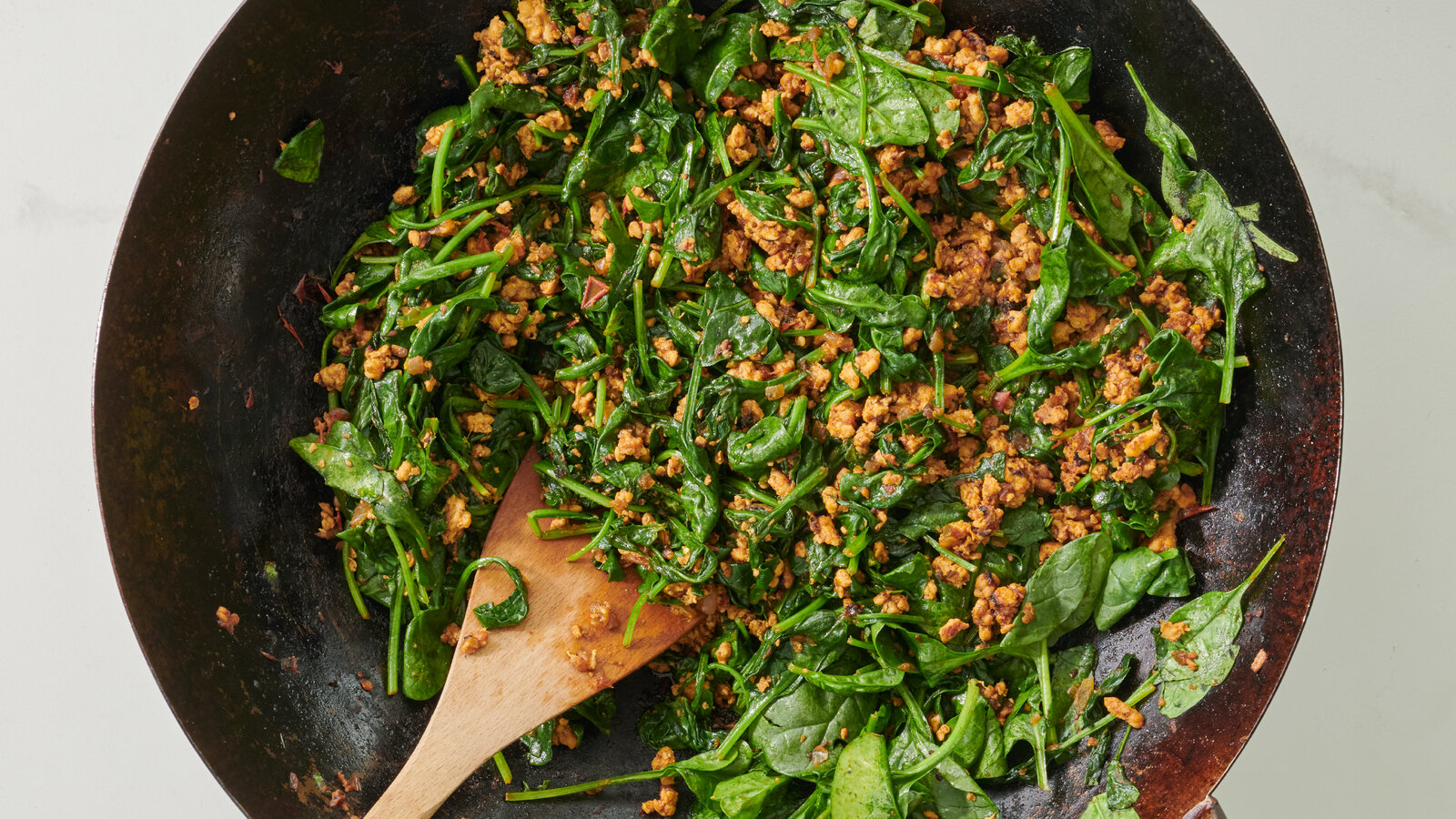
Keema Palak (Ground Chicken and Spinach Curry)
Prep Time: 10 min | Cook Time: 25 min | Total Time: 40 min | Servings: 2 to 4 servings
Ingredients:
1/4 cup ghee or neutral oil
1 medium yellow onion, finely chopped
1 pound ground chicken
1 teaspoon ginger paste or freshly grated ginger
1 teaspoon garlic paste or freshly grated garlic
1 teaspoon fine sea salt
1 teaspoon cumin seeds
1 teaspoon Kashmiri chile powder, or other ground red chile powder
1/4 teaspoon ground turmeric
3 Thai green chiles, chopped
2 medium plum tomatoes, finely chopped
1 pound baby spinach
3/4 teaspoon garam masala
2 tablespoons lemon juice (optional)
Basmati rice or roti, for serving
Directions:
In a medium (9-inch) pot or wok, warm the ghee over high heat until melted, 30 to 45 seconds. Add the onion, chicken, ginger, garlic and salt. Cook over high heat, breaking apart the meat into smaller pieces, until the onion turns translucent and some chicken pieces start to crisp, about 10 minutes.
Reduce the heat to medium, then mix in the cumin seeds, chile powder, turmeric and green chiles. Add the tomatoes and cook, stirring occasionally, until they begin to break down, about 5 minutes.
Add the spinach in four batches, stirring in each batch and cooking until it wilts to make space for the next, about 1 minute. Continue to cook, stirring frequently, until the spinach has softened slightly but still retains some texture, about 7 minutes more. Turn off the heat and finish with garam masala and lemon juice (if desired). Serve with rice or roti.
Tips TLDR;
1 seeded Serrano pepper works just fine here as a replacement for the Thai chilis.
1 lb of spinach seems like a lot, but will totally cook down to a reasonable amount.
Wednesday
Recipe
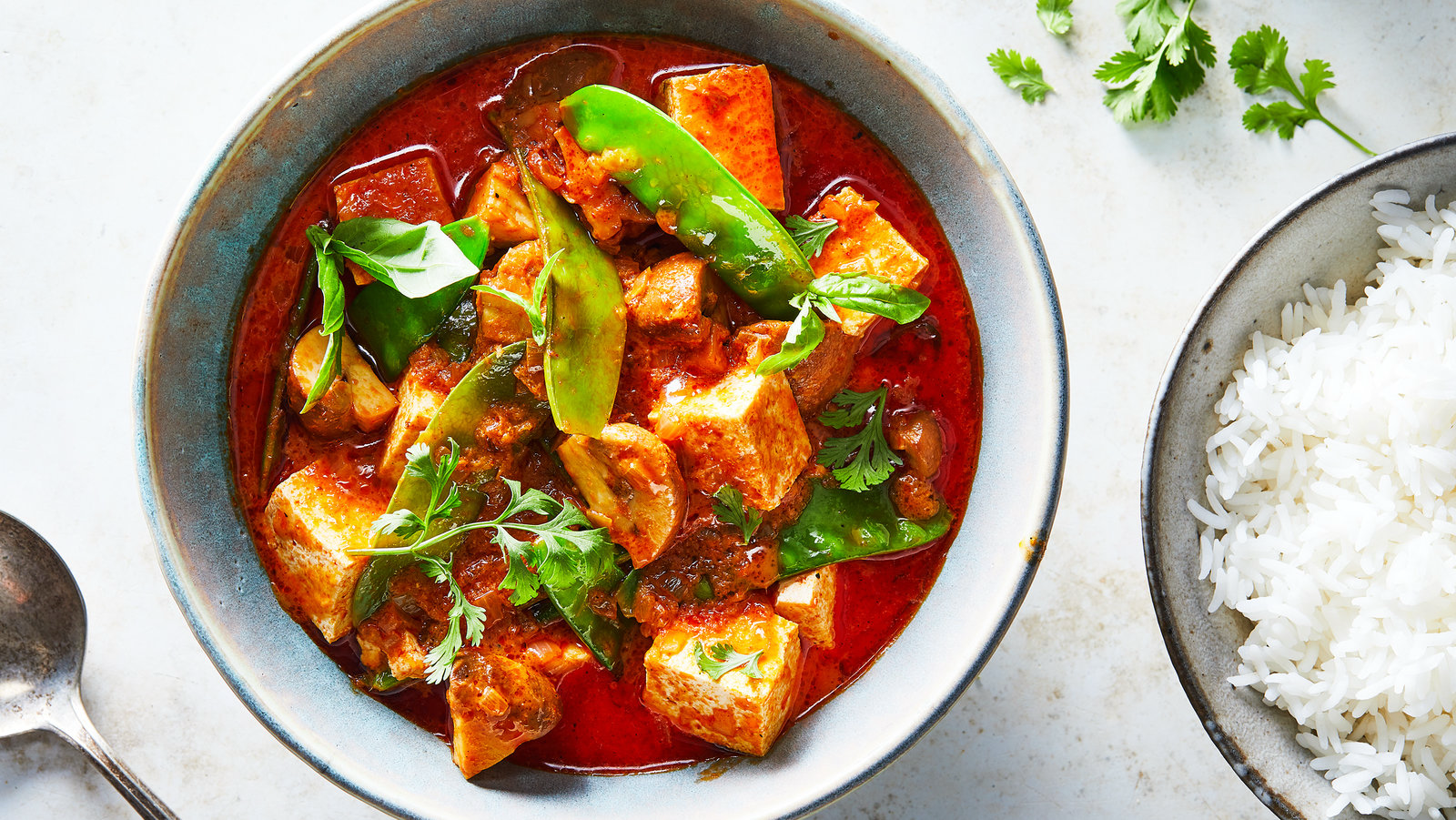
Coconut Red Curry with Tofu
Total Time: 30 min | Servings: Serves 4
Ingredients:
14 ounces extra-firm tofu
1 tablespoon peanut or safflower oil
1-inch ginger root, peeled and minced
2 shallots or 1 small onion, minced
2 garlic cloves, minced
1 Thai chile or 2 serrano peppers, seeded and thinly sliced
2 tablespoons chopped cilantro stems
8 ounces cremini mushrooms, quartered
1/2 teaspoon sea salt, more to taste
3 tablespoons prepared red curry paste
1 cup unsweetened coconut milk
2 teaspoons Asian fish sauce
Zest and juice of 1 lime
1 cup snow peas
Basil and/or cilantro leaves, for garnish
Brown or white rice, for serving
Directions:
Cut tofu into 1-inch slabs and place on paper towel-lined baking sheet. Cover with another layer of paper towels and place another baking sheet on top. Let sit for 20 minutes. Cut into 1-inch cubes.
Heat oil in a large skillet over medium high heat. Add ginger, shallots, garlic, chile and cilantro stems, and sauté until tender, about 5 minutes. Add mushrooms and sauté until golden brown and tender, about 5 minutes. Season with salt. Stir in curry paste and cook 2 minutes. Pour in coconut milk, scraping up any curry paste with a wooden spoon. Add fish sauce, lime zest and juice. Add tofu cubes and snow peas. Simmer until the sauce thickens slightly and the snow peas are tender, 7 to 10 minutes, stirring frequently. Taste and add more salt and/or fish sauce if needed.
Serve warm with brown rice and a scattering of torn basil and/or cilantro leaves on top.
Tips TLDR;
Since the ginger, garlic and shallots are all going in at once, you can save time my mincing them in the food processor.
Two Serrano peppers are a lot. I wouldn't judge if you cut it down to one. Also, most popular red curry pastes are spicy- especially right out of the jar (they seem to mellow after cooking for a bit) . Two tbs works just fine here.
Finally, if you have never cooked with fish sauce, be warned, it stinks. But in small amounts it gives food a great umami/Asian kick without any of the "stinky" flavor. It's also a wonderful addition to barbecue chicken marinades (We'll get more into this towards summer). Fish sauce keeps in the fridge for a long time- I always have a good quality bottle on hand and use it all over the course of 6-8 months.
Thursday
Recipe
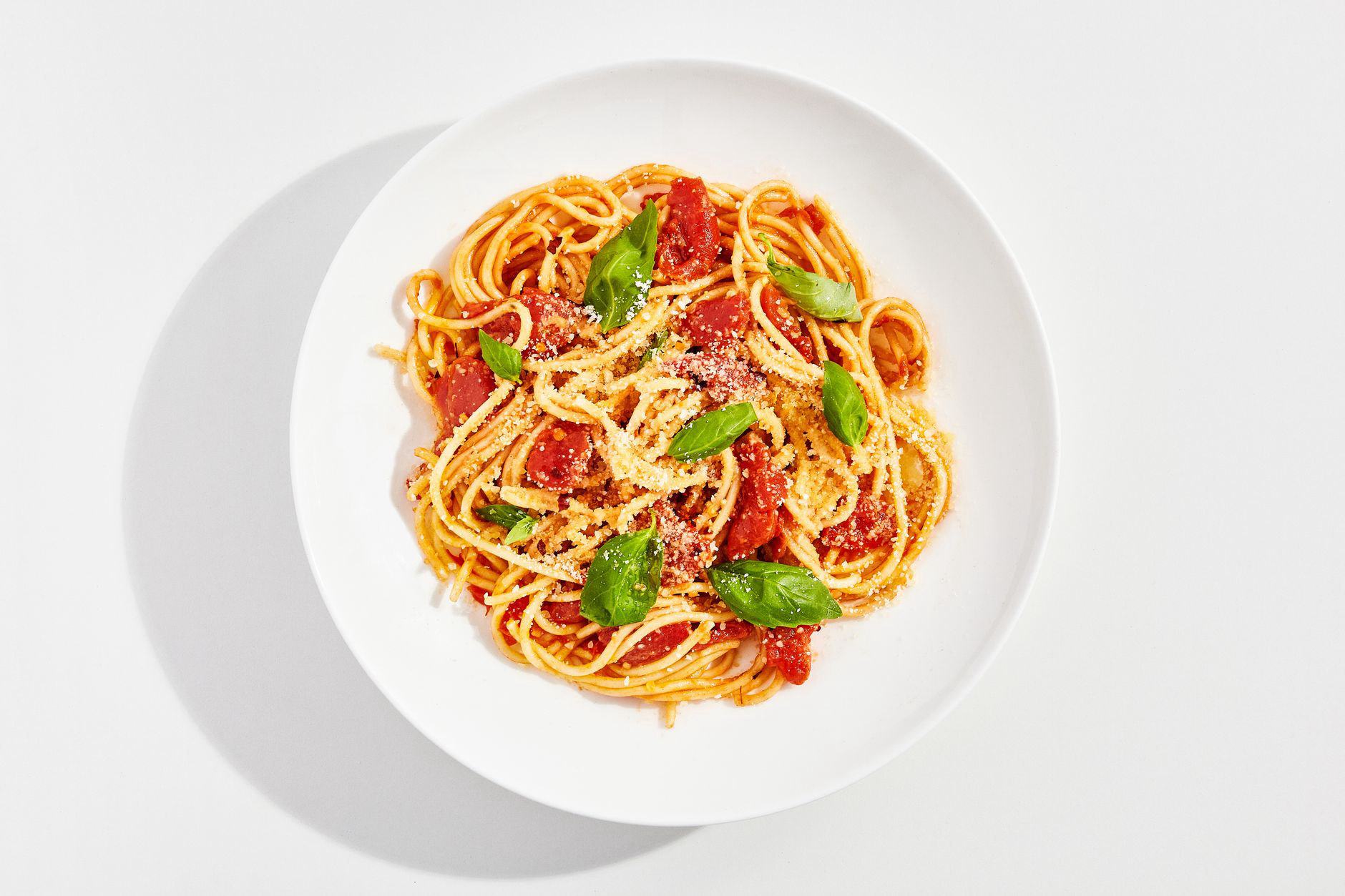
Basically Spaghetti Pomodoro
Servings: 4–6 servings
Ingredients:
3 Tbsp. kosher salt, plus more
1 28-oz. can whole peeled tomatoes
4 garlic cloves
3 Tbsp. extra-virgin olive oil, plus more
Pinch of crushed red pepper flakes, plus more
3 basil sprigs, plus leaves for serving
1 lb. spaghetti
4½ oz. Parmesan, finely grated, divided (about 1 cup)
2 Tbsp. unsalted butter
Directions:
Fill a large stock pot two-thirds full with water and heat over high to bring to a boil. Once you see the water start to steam, add 3 Tbsp. salt. We know, we know: That looks like a LOT of salt. But salting the pasta water aggressively—it should almost be seawater-salty—is the key to making sure that every noodle is properly seasoned through and through, and is one reason why restaurant pasta tastes better than the stuff you usually make. While you wait for the water, start your sauce.
Open a 28-oz. can of whole peeled tomatoes and drain contents in a colander set over medium bowl. (Whole peeled tomatoes are the only canned tomatoes worth buying, TBH. The diced ones sometimes have weird chemicals added to them to keep the chunks from breaking down. Gross.) Using clean fingers, poke a hole in the tomatoes and shake to drain liquid and seeds from the insides of each tomato, reserving liquid. Shake colander over bowl to separate the solids from all the juices and encourage liquid to drain; set aside.
Smash 4 garlic cloves with the flat side of a chef’s knife forcefully, so garlic breaks up into smaller bits; remove skins. If the cloves are really big, you might need to give them an extra smack to make sure they're broken up, but don't bother chopping—the garlic will infuse into the oil you sizzle it in and break down as the sauce simmers.
Working next to your pasta pot, heat 3 Tbsp. oil in a large Dutch oven over medium. (We like using a Dutch oven or a large, high-sided skillet for cooking sauce and finishing pasta; it's kind of the only thing big enough to toss a whole pound of pasta in without noodles flying everywhere.) Add garlic and cook, stirring often with a wooden spoon, until garlic is golden all over, about 3 minutes.
Stir in a pinch of red pepper flakes, then add drained tomatoes and increase heat to medium-high. The idea here is to concentrate the flavor of those tomato solids before adding the liquid they came in, which will give your sauce a more complex, rounded flavor. Cook, stirring occasionally, until tomatoes are darkened in color, browned and caramelized in spots, and starting to break down, 6–8 minutes. Don't rush this part! If you aren't getting color, let it go for another few minutes. Mash with the back of the wooden spoon to form a coarse paste.
Add reserved tomato liquid to pot and stir to combine. Season with a pinch of salt, throw in 3 basil sprigs, and reduce heat so sauce is bubbling at a simmer. Cook, stirring occasionally, until liquid is reduced and sauce is thick like applesauce, 8–10 minutes. If your water isn’t boiling yet, turn off heat under sauce while you wait. If it is, reduce heat to lowest setting and move on.
Add 1 lb. pasta to pot of water and agitate with tongs to prevent sticking. Cook pasta, tossing occasionally, just until lower end of time range given on the package for al dente. If you're not sure if it's done, fish out a piece and take a nibble—it should still be slightly too crunchy to want to eat because it's going to continue cooking in the tomato sauce. Just before pasta is done, use a heatproof measuring cup to scoop out about 1 cup pasta cooking liquid.
Using tongs, transfer pasta from stock pot into Dutch oven with sauce, allowing water to piggyback on pasta into sauce. (That's right, no draining!) Crank heat under sauce up to medium-high and pour in ½ cup reserved pasta cooking liquid. If you've never finished cooking pasta in a pan full of sauce, your life is about to be changed—this process is what ensures that every single noodle is completely coated and infused with saucy goodness, and is pretty much the main difference between a dish of "meh" pasta and one that blows your mind.
Cook pasta, tossing constantly, until sauce is clinging to each noodle and any standing liquid is mostly absorbed, about 1 minute. You still want a saucy consistency, but not watery. If things ever start to look a little dry, just add another splash of that pasta cooking water; if they look too wet, just wait a bit for some more liquid to evaporate.
Slowly sprinkle in half of the Parmesan cheese (you want the grainy stuff with the texture of shaky cheese, not Microplaned), tossing constantly, until it has melted into the sauce. Add more pasta water, a couple of tablespoons at a time, to loosen sauce if necessary—it should be plenty saucy while you're incorporating the cheese so it emulsifies into the sauce properly. You want the sauce to ooze but still be thick enough to coat the pasta.
Remove pot from heat and stir in 2 Tbsp. butter until melted. Finishing with a bit of butter is almost always a good idea—it makes the finished dish extra glossy and delicious. (Don't look at us like that—if you think pasta is diet food, you're kidding yourself.)
Using tongs, divide pasta among bowls, then top with remaining cheese and basil leaves. Top with red pepper flakes and an extra drizzle of oil, if you feel. And there you have it: saucy, glossy Basically Spaghetti Pomodoro. Give yourself a pat on the back, and kiss the jarred stuff goodbye.
Tips TLDR;
This is a crazy long but very basic pasta recipe from the peeps at Bon Appetit that is actually 100% worth the time reading , IMHO. It showcases how a few minor shifts in prep can make a big difference in the final product.
This recipe will also reward those who hunt around and try different kinds of canned, whole peeled tomatoes. Start with the classic Muir Glen, and go from there.